

Posted by Enterosgel

A sudden, hard-to-ignore need to poo can feel like an emergency. Causes of urgent bowel movements include diarrhoea, irritable bowel syndrome (IBS), food or drink triggers and other digestive conditions. Urgency alone does not identify the cause, but changes in your usual bowel habits can offer useful clues.
If you’re rushing to the toilet, worrying about an accident or changing your plans, the experience can be distressing. This guide explains how diet and bile acid malabsorption may contribute to bowel urgency, what other causes can feel similar, and which symptoms mean you should seek medical advice.
You’ll also find clear guidance on when to speak to a GP, including signs that need prompt attention. Understanding the possible reasons for urgency can help you recognise patterns and decide on a sensible next step.
Key Takeaways
- Bowel urgency can have several causes, from diarrhoea and food triggers to digestive conditions; the pattern and accompanying symptoms can help distinguish them.
- Bile acid malabsorption is one possible reason for ongoing loose, urgent stools, and may need assessment rather than dietary changes alone.
- Notice how food, drink and fibre affect your symptoms, and seek medical advice if bowel changes persist or interfere with daily life.
- Blood in your poo, bloody diarrhoea or black or dark red poo needs prompt medical attention in the UK.
- Learn how Enterosgel may fit as a drug-free option for diarrhoea, and when persistent or concerning symptoms call for professional advice instead.
When to seek medical advice
Treatment for frequent urgent bowel movements depends on the cause, which may include diarrhoea, constipation or a medicine’s side effects. A GP can assess persistent symptoms and recommend appropriate care; tests may help identify the cause.
Red flags needing assessment
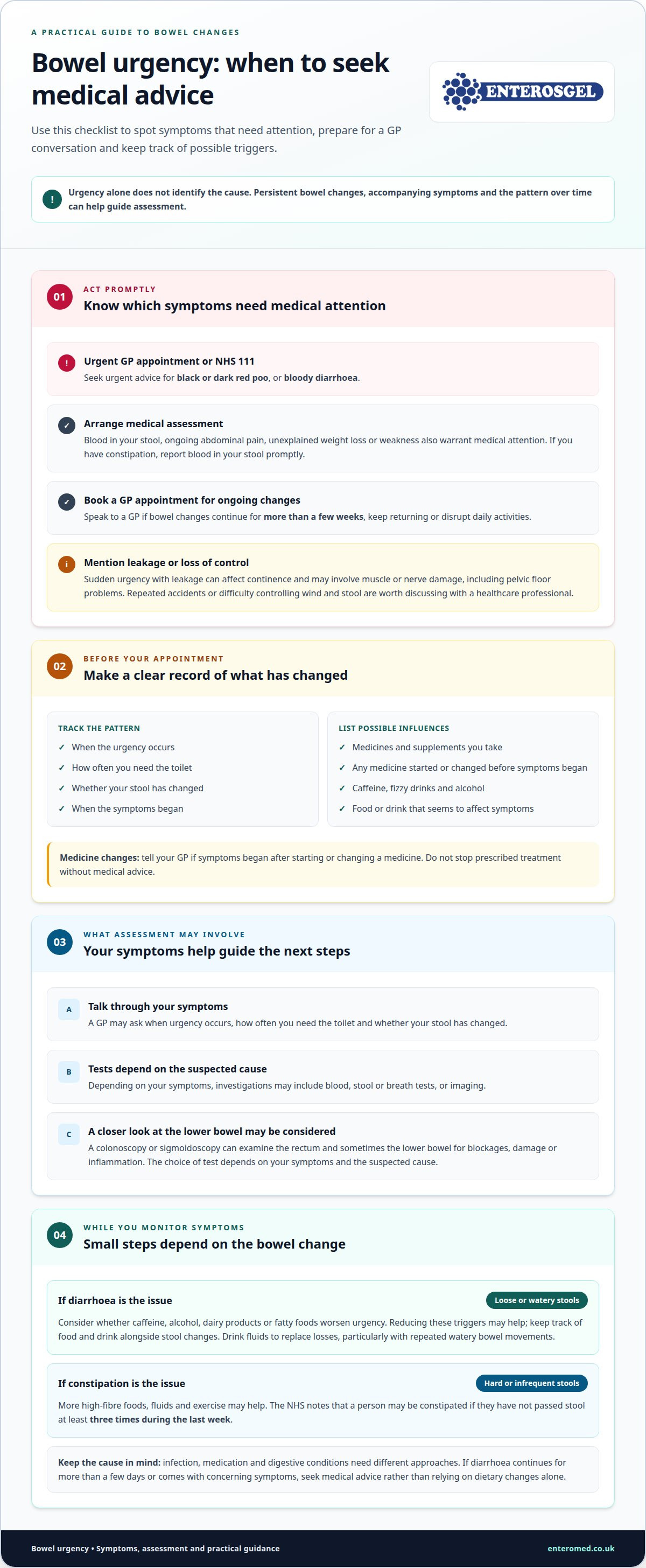
Red flags are symptoms that need prompt medical assessment, rather than continued self-management. In the UK, seek an urgent GP appointment or contact NHS 111 for black or dark red poo, or bloody diarrhoea. Blood in your stool, ongoing abdominal pain, unexplained weight loss or weakness also warrant medical attention. Sudden urgency with leakage can affect continence and may involve muscle or nerve damage, including pelvic floor problems.
Medication and supplement side effects
Some medicines and supplements can change bowel habits and contribute to urgency or diarrhoea. If symptoms began after starting or changing a medicine, tell your GP, but don’t stop prescribed treatment without medical advice. Note when symptoms began and list the medicines and supplements you take. Mention caffeine, fizzy drinks and alcohol too, as these may help identify possible triggers.
A GP may ask when urgency occurs, how often you need the toilet and whether your stool has changed. Depending on your symptoms, investigations may include blood, stool or breath tests, or imaging. A colonoscopy or sigmoidoscopy can examine the rectum and sometimes the lower bowel for blockages, damage or inflammation. The choice of test depends on your symptoms and the suspected cause.
Arrange a GP appointment if bowel changes continue for more than a few weeks, keep returning or disrupt daily activities. The NHS notes that a person may be constipated if they have not passed stool at least three times during the last week. Ongoing constipation, diarrhoea or leakage is worth discussing, particularly if it is new for you or affects social plans.
Treatment depends on what is driving the urgency. For diarrhoea, avoiding caffeine, alcohol, dairy products and fatty foods may help; constipation may respond to more high-fibre foods, fluids and exercise. If tests point to a medical condition or a medicine-related cause, care can focus on that. Describe your symptoms, diet changes and medicines clearly so your GP can decide which assessment or treatment is appropriate.
If you have constipation, report blood in your stool promptly. Bleeding and other accompanying symptoms may point to an underlying condition that needs assessment and cause-specific treatment.
Bowel Urgency, Why Does It Feel Like an Emergency Every Time?
A sudden need to poo can happen when loose stool reaches the rectum quickly. Diarrhoea, IBS and other digestive conditions may contribute, but urgency alone does not reveal the cause.
Causes of diarrhoea
Diarrhoea means frequent, loose or watery bowel movements, often with urgency. Infection, medication and other triggers can cause it, while particular foods or drinks may worsen symptoms. For example, urgency after a meal may follow a food trigger, whereas symptoms that begin after starting a new medicine may be medication-related. The timing, stool consistency and other symptoms help distinguish possible causes. Constipation can also affect bowel control: hard stool may block the rectum, allowing softer stool to leak around it.
Inflammation and urgent bowel movements
Bowel inflammation can be associated with diarrhoea and urgency, as an inflamed bowel may become more sensitive and active. This can lead to loose stool and a sudden need to reach a toilet. In conditions such as Crohn’s disease or colitis, urgency may persist even when other symptoms ease. Note whether urgency comes with pain, blood or ongoing changes in stool, as these can affect continence and daily plans.
IBS and bowel urgency
Yes. IBS can cause urgent bowel movements, particularly IBS-D, where diarrhoea is the predominant bowel pattern. The bowel’s response to food, stress or normal digestive activity can feel unusually strong, causing cramps and a sudden need to poo. Symptoms vary: one person may have loose stools and urgency, while another experiences constipation or alternating patterns. Recording timing, stool changes and possible triggers can help you explain your symptoms.
Why watery diarrhoea feels urgent
Watery stool can fill the rectum quickly and be harder to hold than formed stool. With little warning, the urge can feel like an emergency, and leakage may occur if a toilet isn’t nearby. The nerves and muscles involved in bowel control also affect how clearly you feel the urge and how long you can delay it. Discuss repeated accidents or difficulty controlling wind and stool with a healthcare professional.
Controlling diarrhoea
During diarrhoea, consider whether caffeine, alcohol, dairy products or fatty foods seem to worsen urgency. Reducing these triggers may help control symptoms; keep track of what you eat and drink alongside changes in stool. Drink fluids to replace losses, particularly with repeated watery bowel movements. Don’t assume every episode has the same cause: infection, medication and digestive conditions need different approaches. If diarrhoea continues for more than a few days or comes with concerning symptoms, seek medical advice rather than relying on dietary changes alone.
Bile acid malabsorption
Bile acid malabsorption is one possible explanation for ongoing watery diarrhoea and bowel urgency. It relates to how bile acids are handled during digestion, rather than to an infection or food intolerance.
The liver makes bile, which helps the body digest fats. Bile acids normally move through the digestive system as part of this process. If too many reach the large bowel, they can affect bowel activity and stool consistency, leading to loose, watery stools and a sudden need to use the toilet.
Urgency can be difficult to manage when watery stool arrives with little warning. Some people also experience abdominal discomfort or repeated trips to the toilet. These symptoms can disrupt daily routines and, if stool escapes before someone reaches a toilet, contribute to bowel or faecal incontinence. Symptoms alone cannot establish the cause.
Bile acid malabsorption can resemble other digestive problems, including IBS-D. Diarrhoea does not prove that bile acids are responsible, and urgency can have more than one cause. Note when symptoms develop, how often watery stools occur, and whether meals or a lifestyle change seem connected. A clear record gives your doctor useful details to consider.
Discuss persistent or recurring watery diarrhoea with a doctor, especially if urgency is new or affects continence. Explain when symptoms began, how they change, and whether abdominal pain or other bowel changes occur. The clinician can consider the pattern alongside your health history and decide whether further investigation is appropriate. Don’t treat a suspected cause as confirmed without an assessment.
Care depends on the cause of your symptoms. If an assessment supports bile acid malabsorption, treatment can focus on managing that underlying problem. Advice for another condition may differ, so the right approach depends on clinical assessment. Mention any medicines or supplements you take to give the doctor a clearer picture.
Urgency can also affect your confidence outside the home. If you plan journeys around toilet access or avoid social activities, tell your doctor. Leakage can involve more than stool consistency: the muscles and nerves involved in bowel control also matter. A clinician can assess continence symptoms alongside diarrhoea and discuss appropriate next steps.
Dietary and fibre-based treatment
Food and drink can affect stool consistency and bowel urgency. Dietary changes may help control symptoms, but they do not identify or treat every underlying condition. Start by recording meals, drinks, bowel movements and urgency. Note patterns, such as symptoms after coffee, alcohol, dairy products or fatty meals. This gives you a clearer basis for discussing possible triggers with a GP.
For diarrhoea, avoiding caffeine, alcohol, dairy products and fatty foods may help control symptoms. Change one suspected trigger at a time rather than removing several food groups together. This makes it easier to notice whether a particular drink or meal affects your bowel habits. If diarrhoea persists, dietary changes alone may not address causes such as infection, medication effects or inflammation.
Fibre can have different effects depending on the bowel problem. For constipation, increasing high-fibre foods may help stool pass more easily. Fibre supplements such as ispaghula husk or psyllium husk can be taken daily to help produce regular, firm stools. Add fibre gradually and observe any changes, as a sudden increase can affect bloating or discomfort. Persistent constipation still needs attention, especially alongside other symptoms.
Fluids matter alongside fibre. Aim for eight cups of water a day to help manage bowel urgency. To help prevent constipation, drink at least six to eight cups of fluid a day. These recommendations relate to different bowel patterns, so consider whether loose or hard stools are your main concern. With ongoing diarrhoea, replacing fluid losses is also important.
Movement can support bowel habits when constipation is part of the problem. Increasing exercise alongside high-fibre foods and fluids may help reduce constipation. Choose an activity that fits your routine, such as a regular walk. Dietary adjustments will not strengthen damaged muscles or resolve every cause of faecal incontinence. Bowel control can involve the pelvic floor, nerves or a digestive disease, so persistent leakage needs medical assessment.
Urgency can cause anxiety, particularly if you’re worried about reaching a toilet. Planning access to facilities may ease practical stress, but it should not replace assessment when symptoms continue. Surgery is usually needed only in rare cases of bowel incontinence. A clinician can assess whether the problem relates to diet, inflammation, disease or another cause, then discuss suitable treatment. Seek advice if restricting foods makes eating difficult or symptoms remain disruptive.
Enterosgel
ENTEROSGEL® is a CE-certified medical device and oral intestinal adsorbent for diarrhoea-related symptoms, including urgency. It binds bacterial toxins from pathogenic bacteria, rather than capturing the bacteria themselves. This action helps reduce the duration of diarrhoea and the number of loose stools. It may be considered during acute diarrhoea or by people managing IBS-D symptoms, but ongoing or concerning symptoms still need medical advice.
Enterosgel is available as a 225g Tube, sachets, and an IBS Starter pack with a tube and sachets. For IBS-D symptoms and daily use, the product should be taken in 30-day courses, with each course followed by a short break. Choose the format that suits your needs and follow its instructions for use.
Contact Enterosgel if you’d like to discuss which option may suit your digestive symptoms.
Choose a clear next step
Understanding the causes of urgent bowel movements can help you decide what to do next, but persistent changes deserve proper assessment. Keep a brief record of when urgency happens, how your stools change and whether it disrupts daily routines. This can help you explain the pattern clearly when seeking medical advice.
Enterosgel may be considered for diarrhoea-related symptoms, but it isn’t a substitute for investigating ongoing bowel changes or seeking help for warning signs. Your symptoms and medical history determine whether it’s suitable. If you’d like to discuss Enterosgel in relation to your digestive symptoms, contact Enterosgel for support.
A measured next step can make bowel symptoms easier to discuss and manage. You don’t have to work out the cause alone.
Frequently Asked Questions
Is it normal to poo more than three times a day?
It may be normal if this frequency is usual for you and your stools remain formed. Bowel habits vary, so compare your current pattern with your own baseline rather than judging it by a single day. A steady pattern without discomfort differs from a sudden change. Note whether extra visits are linked to meals, interrupt sleep or affect usual activities, and discuss persistent changes with a GP.
What do frequent bowel movements mean?
Frequent bowel movements describe a change in how often you go, not a diagnosis. Causes of urgent bowel movements include digestive conditions, changes in gut function and reactions to food or medicines. The timing and appearance of your stool can help distinguish patterns: record whether visits happen after meals, overnight or throughout the day. Note recent medication changes too, as they give a GP useful context.
What is diarrhoea?
Diarrhoea is the passage of loose or watery stools more often than is usual for you. It can be short-lived or persist, and its duration helps describe the episode to a clinician. Record when it began, whether stools are watery and how your usual routine has changed. This can help distinguish an isolated episode from a recurring pattern that needs assessment.
What is urgency?
Urgency means feeling that you need to open your bowels immediately, with little time to delay. It describes the strength and timing of the sensation, not how many times you go each day. To explain its impact, note whether you can reach a toilet, whether you have leakage, and whether it changes work, travel or social plans. These details help a clinician assess how it affects you.
What causes sudden urgency to have a bowel movement?
Possible causes of urgent bowel movements include diarrhoea, IBS, bile acid malabsorption, and reactions to medicines or foods. A sudden episode may have a different explanation from a recurring pattern, so note what was happening beforehand and whether it happens again. Include recent illness or treatment changes in your notes. If urgency keeps returning or affects continence, seek medical advice rather than assuming a trigger.
Can food intolerances, caffeine or spicy foods trigger bowel urgency?
Yes, food intolerance or sensitivity may trigger symptoms, and caffeine or spicy foods can affect bowel activity in some people. A reaction is not automatically a food allergy, and one episode does not establish the cause. Note the food or drink, amount, timing and symptoms that follow. If avoiding a suspected trigger would remove several foods from your diet, discuss a balanced approach with a healthcare professional.


