

Posted by Enterosgel

Alcohol can turn a hangover into a bowel problem as well as a headache. It may irritate the stomach and intestines and make the colon contract more often, moving stool through before enough water is absorbed. A practical hangover diarrhoea remedy starts with replacing lost fluids, resting and choosing gentle foods while symptoms settle.
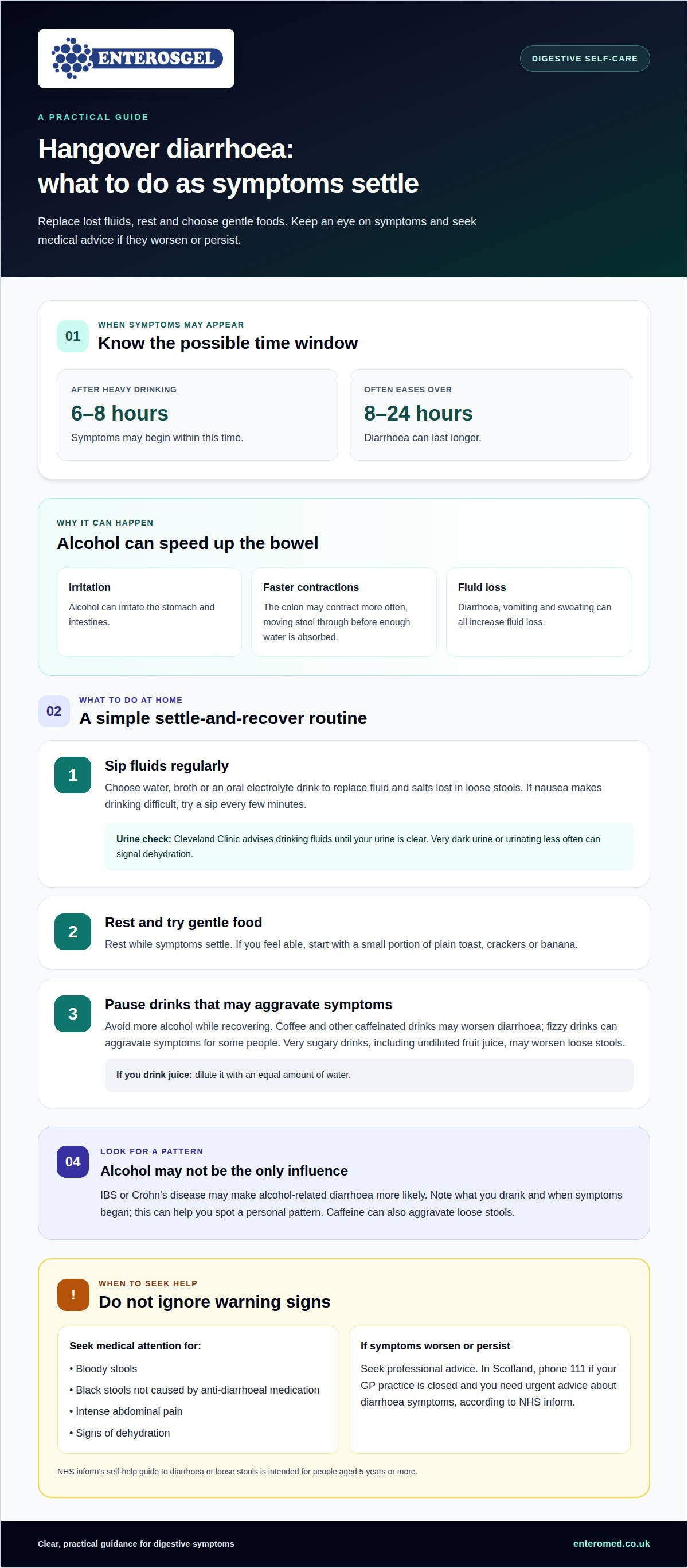
It’s understandable to want quick relief when nausea, cramps or loose stools arrive alongside a hangover. Symptoms may begin six to eight hours after heavy drinking and often ease over eight to 24 hours, though diarrhoea can last longer. IBS and Crohn’s disease may also make alcohol-related diarrhoea more likely, and caffeine can aggravate loose stools.
This article explains how alcohol can affect digestion, which conditions may increase the risk, and what symptoms can accompany a hangover. You’ll also find practical self-care steps and signs that mean you should seek medical advice.
Key Takeaways
- Frequent sips of water or broth can help replace fluid lost through diarrhoea; caffeine and fizzy drinks may make loose stools worse.
- Keeping a note of what you drank and when symptoms started can help reveal personal triggers, especially if you have a bowel condition.
- Hangovers can involve digestive symptoms alongside other discomfort, so pay attention to whether symptoms are easing or getting worse.
- In Scotland, phone 111 if your GP practice is closed and you need urgent advice about diarrhoea symptoms, according to NHS inform.
- Enterosgel captures bacterial toxins from pathogenic bacteria that cause leaky gut and diarrhoea; it does not bind or capture bacteria.
Why Do I Get Diarrhoea After Drinking Alcohol?
Alcohol can irritate the stomach and intestines, disrupting normal digestion. It can also make colon muscles contract more often, moving stool through the large intestine before enough water is absorbed. This can cause loose, frequent bowel movements. Drinking alcohol, vomiting and sweating can also increase fluid loss. Dehydration may add thirst, headache, dizziness and weakness.
If you have a hangover with diarrhoea, start with frequent small sips of water. If nausea makes drinking difficult, try a sip every few minutes. Water, broth and oral electrolyte drinks can replace fluid and salts lost in loose stools. Cleveland Clinic advises drinking fluids until your urine is clear. Very dark urine or urinating less often can signal dehydration. Rest, and try a small portion of plain toast, crackers or banana if you feel able.
Avoid more alcohol while recovering. Drinking again to ease a hangover can prolong the cycle and delay recovery. Coffee and other caffeinated drinks may worsen diarrhoea, so choose water or broth instead. Fizzy drinks can aggravate symptoms for some people, while very sugary drinks, including undiluted fruit juice, may worsen loose stools. If you drink juice, dilute it with an equal amount of water. Next time, eating before drinking and choosing lower-alcohol or non-alcoholic drinks can help reduce your alcohol intake.
How can you treat hangover diarrhoea at home? Replace fluids with regular sips of water, broth or an electrolyte drink. Rest and choose bland food such as toast. Avoid alcohol, coffee and fizzy drinks until your digestion settles.
Can you take loperamide for hangover diarrhoea? It may slow bowel movements, but it doesn’t replace lost fluids or address dehydration. Follow the packet directions. Seek medical advice rather than self-treating if you have bloody or black stools, intense abdominal pain or signs of dehydration.
For UK NHS self-help, NHS inform’s guide to diarrhoea or loose stools is intended for people aged 5 years or more. Seek professional advice if symptoms worsen or persist. In Scotland, phone 111 if your GP practice is closed and you need urgent advice about diarrhoea symptoms, according to NHS inform. Bloody stools, black stools not caused by anti-diarrhoeal medication, intense pain and dehydration also warrant medical attention.
Bowel conditions and alcohol-related diarrhoea risk
Alcohol can affect digestion in several ways, so diarrhoea after drinking may have more than one cause. Understanding these effects can help you spot patterns and recognise when alcohol may be aggravating an existing bowel problem.
Alcohol’s effects on digestion
Alcohol can alter gut motility, the movement of material through your digestive tract. It may make colon muscles contract more frequently, pushing stool onwards before the large intestine absorbs enough water. The result can be loose or urgent bowel movements. Alcohol can also slow digestion elsewhere, so its effects are not always the same throughout the gut.
This is worth noting if your bowel habits already change with meals or drinks. Record what and when you drank, and when symptoms began. This can show whether diarrhoea follows a particular type of alcohol or heavier drinking. Eating before drinking may slow alcohol absorption, but it doesn’t prevent alcohol from affecting your bowel.
Alcohol-related digestive irritation
Alcohol-related irritation occurs when the stomach or intestinal lining becomes unsettled after drinking. Alcohol can irritate these tissues and disrupt normal digestive activity. You might notice discomfort, nausea or looser stools alongside a hangover. These effects can occur together, but digestive irritation and faster colon contractions are distinct processes.
Notice how symptoms change after drinking and eating. A diary can help distinguish a one-off episode from a recurring pattern linked to alcohol. Staying hydrated helps replace fluid lost through diarrhoea, but doesn’t remove the underlying irritation. Avoid further alcohol while symptoms are active, as more drinking can continue to upset digestion.
Causes of alcohol-induced diarrhoea
Alcohol-induced diarrhoea means loose stools after alcohol affects digestion. More frequent colon contractions leave less time for the bowel to absorb water, and irritation of the stomach and intestines can also contribute. The amount consumed, what you drink and your digestive health may all influence your symptoms.
IBS or Crohn’s disease can make alcohol a possible trigger for diarrhoea. If you have a diagnosed bowel condition, compare your symptoms on drinking days and alcohol-free days. This can help you identify a possible trigger alongside other influences, such as food or a change in routine.
If limiting alcohol feels difficult, seek professional help. A GP or other healthcare professional can discuss your drinking and its effects without judgement. Support can help if attempts to reduce consumption haven’t worked or alcohol is affecting your health, relationships or daily life. If you feel unwell after drinking, focus first on resting and staying hydrated.
Digestive conditions and other possible triggers
Alcohol isn’t always the only factor behind loose stools after a night out. An existing bowel condition, a meal, poor sleep or pain relief can also affect how you feel. Consider the timing of each symptom to help distinguish a familiar trigger from a new problem.
Existing bowel conditions
Irritable bowel syndrome (IBS), particularly IBS-D, and Crohn’s disease can make diarrhoea more likely after drinking alcohol. Alcohol may be an additional trigger rather than the sole cause. For example, someone with IBS might notice urgency after drinking, even when their usual symptoms are settled. The effect can vary between people and occasions.
Record what you drank, what you ate and when symptoms began. Include abdominal pain, bloating and urgency, not just changes in your stools. A simple diary can show whether alcohol repeatedly precedes a flare or symptoms also follow particular meals. If your usual pattern changes, or symptoms persist or worsen, discuss this with a healthcare professional.
Milk and lactose
Milk may contribute to diarrhoea if you have difficulty digesting lactose, the natural sugar in milk. This is a possible trigger separate from alcohol. A milky cocktail, creamy liqueur or late-night milk drink may make it harder to tell which ingredient came before your symptoms.
Note whether symptoms also follow dairy when you haven’t had alcohol. This pattern is more useful than removing several foods at once. Avoid broad dietary changes based on a single episode. If dairy regularly causes symptoms, a GP can help assess the cause and appropriate treatment.
Sleep and symptom sensitivity
Alcohol can disrupt a night’s rest, while diarrhoea itself may interrupt sleep. After a poor night, nausea, cramps or fatigue can feel harder to manage. This doesn’t prove that sleep caused the diarrhoea. Note sleep alongside drinking, meals and bowel symptoms to see whether the same combination recurs.
During recovery, prioritise rest and keep fluids nearby, especially if diarrhoea has disturbed your sleep. A symptom diary can show whether poor sleep accompanies episodes or follows them. It can also help you explain the sequence clearly at a healthcare appointment.
Medicines and other triggers
Ibuprofen and naproxen are NSAIDs sometimes taken for aches, but they can upset the digestive system. If diarrhoea or stomach discomfort starts after taking one, note the dose and timing, and read the packet instructions. Don’t take more than directed. If you’re unsure about suitable pain relief, ask a pharmacist or GP.
Infection, food and medicines can also cause acute diarrhoea, so symptoms after drinking don’t automatically mean alcohol was responsible. Consider whether anyone who shared your meal is unwell, or whether symptoms began after starting a new medicine. Seek medical advice if diarrhoea is severe, persists or comes with concerning symptoms. These details can help guide what happens next.
Hangover symptoms
Hangovers can affect more than your head. Symptoms usually begin six to eight hours after excessive alcohol intake and tend to ease over eight to 24 hours. Headache, thirst, tiredness, nausea and sensitivity to light or sound may occur together. Diarrhoea can add urgency, cramps and repeated trips to the toilet. The combination can leave adults feeling unwell and make it harder to judge whether symptoms are improving.
The digestive system can be affected alongside the rest of the body. Nausea, for example, can make eating difficult, while diarrhoea and vomiting can increase fluid loss. Sweating may add to that loss. Note whether you have diarrhoea, vomiting, abdominal pain or fever, and when each began. These symptoms can overlap, and a clear record helps you describe the episode if you seek medical advice.
Timing offers a useful clue, not a diagnosis. Symptoms starting the morning after drinking may fit a hangover, particularly if you also have a headache and feel tired. But food-related illness or another condition can also cause diarrhoea after a night out. Consider whether anyone who ate the same meal feels ill, or whether symptoms began before you finished drinking. A pattern that differs from your usual hangover deserves attention.
Track changes throughout the day. Write down when diarrhoea began, how often it occurs, whether you can keep fluids down, and whether pain is mild or intense. Look for signs of dehydration, such as unusual thirst, dizziness or passing very little urine. These details can help show whether symptoms are easing or need medical assessment. Alcohol can also disrupt sleep, so fatigue may persist even as stomach symptoms improve.
Seek medical advice if diarrhoea worsens, continues beyond two to three days, or comes with new symptoms. Bloody stools, black stools not caused by anti-diarrhoeal medication, intense abdominal or rectal pain, and signs of dehydration need medical attention. Don’t assume severe pain or blood is part of an ordinary hangover. If vomiting prevents you from keeping fluids down, or confusion develops, seek urgent help rather than waiting for the usual recovery period.
The expected timing is not the only guide. Compare the whole symptom pattern, including headache, nausea, bowel changes and how symptoms progress. If diarrhoea is the main problem, lasts longer than a typical hangover or worsens instead of easing, treat it as a separate health concern. Record the timeline and associated symptoms, then share them with a healthcare professional.
Enterosgel: Enterosgel 225g Tube
Enterosgel 225g Tube is an oral intestinal adsorbent for diarrhoea. It captures bacterial toxins from pathogenic bacteria which cause leaky gut and diarrhoea; it does not bind or capture bacteria. By binding these toxins, it helps reduce the duration of diarrhoea and the number of loose stools. Enterosgel is a drug-free medical device, not a pharmaceutical medicine.
Enterosgel may be considered for diarrhoea symptom support alongside replacing lost fluids. It doesn’t replace medical assessment when symptoms are severe, worsening or persistent. Follow the product’s instructions for use, and seek medical advice for concerning symptoms.
For details about the Enterosgel 225g Tube, visit Enteromed.
Choose a practical next step
Use your symptom pattern to guide what you do next. Note whether diarrhoea consistently follows drinking, whether other triggers are present, and whether symptoms are changing. A hangover diarrhoea remedy should complement fluid replacement, not distract from signs that need medical attention.
Enterosgel is available as the Enterosgel 225g Tube and Enterosgel Sachets (Pack of 10). Enterosgel Kids 0+ is also available for children. It is a gentle option for children because it contains no sugar, gluten or preservatives. Unlike other antidiarrhoeal drugs, Enterosgel is safe for children under 12 years. For children under 3 years old, it is advisable to consult a doctor prior to use.
If symptoms are severe, persist or worsen, seek medical advice rather than relying on self-care alone. For information about Enterosgel and its available formats, contact Enterosgel for support. Taking a considered next step can help you manage symptoms with greater confidence.
Frequently Asked Questions
What causes diarrhoea?
Diarrhoea has several possible causes, including a stomach infection, food intolerance or medicine side effects. A sudden episode differs from a recurring pattern, which may be linked to an ongoing digestive condition. Note recent changes, such as starting a medicine or eating a food that usually upsets you. This context can help a healthcare professional assess the likely cause and decide whether further evaluation is needed.
How long does diarrhoea last?
In Scotland, diarrhoea in adults normally clears within a few days to a week. The cause and whether symptoms are easing can affect how long it lasts. Keep a brief record of when it began and how it changes, particularly if symptoms fluctuate. If it continues beyond a week, contact your GP practice urgently in Scotland. A longer episode shouldn’t be treated as a typical short-lived upset without considering its cause.
What kind of foods should you eat if you have diarrhoea?
Choose foods you can tolerate, and eat small portions rather than forcing a full meal. Plain rice, potatoes or porridge may suit you. A restrictive diet isn’t necessary for everyone. Avoid rich or heavy meals while your gut is unsettled, then return to your usual varied diet as your appetite improves. Keep up with fluids, as meals don’t replace drinks lost through diarrhoea.
When should you consult with a doctor or other healthcare professional?
Arrange medical advice if episodes keep returning, especially when they affect daily activities or follow a new medicine. Tell the clinician about any known bowel condition, recent dietary changes and whether symptoms also occur when you haven’t been drinking alcohol. This can help distinguish a one-off trigger from a recurring problem. A pharmacist can also discuss whether a medicine might be contributing and whether you need a medical review.
When should you get medical care for diarrhoea?
Get emergency help if diarrhoea occurs alongside severe difficulty breathing or another acute emergency. In Scotland, call 999 or go to A&E for emergency symptoms. For urgent advice that is not an emergency, use the appropriate NHS service for your area. If you’re unsure how severe the situation is, describe the symptoms clearly and explain how quickly they developed when seeking help.
What causes diarrhoea after drinking alcohol?
Alcohol can contribute, but the drink may not be the only trigger. Caffeine in a mixer, a rich meal or a medicine taken for aches could also affect your digestion. If symptoms follow a particular combination, record the drinks, food and medicines involved, and compare that with occasions when you drank something different. Repeated episodes may point to an underlying bowel sensitivity rather than a single isolated cause.


