

Posted by Enterosgel

After taking a gut binder, the practical change to look for is whether diarrhoea improves, with fewer loose stools or a shorter episode. What to expect after taking a gut binder depends on why you’re using it and how your symptoms change. The aim is symptom relief, not a particular sensation.
It’s understandable to want clear guidance when diarrhoea or digestive discomfort disrupts your day. Eating, drinking and moving around can feel harder, and changes in bowel movements can be unsettling. A calm, practical approach can help you manage symptoms at home while watching for signs that need medical attention.
This guide explains when a gut binder may be used, how to think about timing around food and other medicines, and what bowel changes to notice. It also covers simple ways to support comfort and movement, plus when to seek medical advice rather than manage symptoms at home.
Key Takeaways
- An abdominal binder may make movement more comfortable after surgery, but it doesn’t heal an incision or replace movement and breathing exercises.
- According to the NHS, a stomach binder is commonly worn for 6 weeks after a tummy tuck.
- Changes in bowel activity and appetite can happen during recovery; pay attention to how you feel as you return to eating and moving about.
- Understand the difference between abdominal support after surgery and an intestinal adsorbent used for diarrhoea before choosing what guidance applies.
- Enterosgel captures bacterial toxins from pathogenic bacteria associated with leaky gut and diarrhoea, helping reduce the duration of diarrhoea and the number of loose stools.
Potential swelling and discomfort reduction
If you feel worse after taking an oral gut binder, stop and contact a GP or pharmacist before taking another dose. Seek urgent medical help for severe symptoms, including serious difficulty breathing.
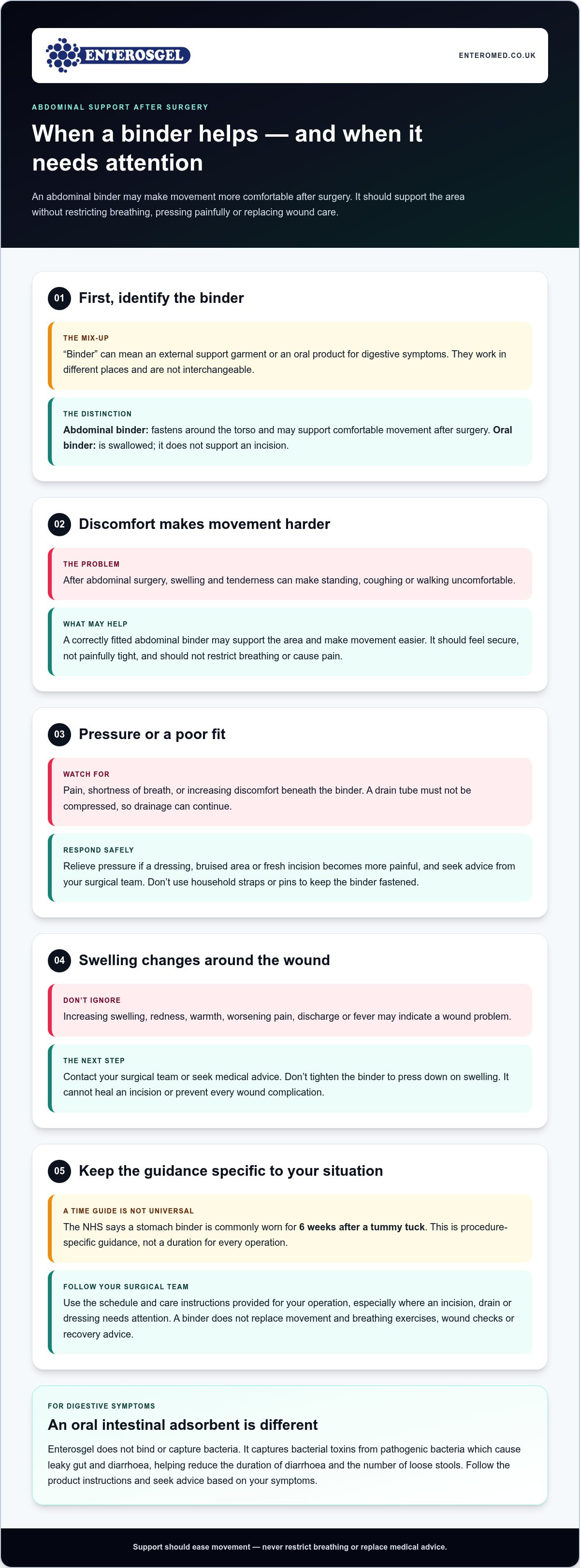
An oral gut binder and an abdominal binder are different products. An oral product is swallowed; an abdominal binder is a wide support fastened around the torso. After surgery, external support may make movement more comfortable. It does not act inside the digestive tract, and an oral binder does not support an incision.
After abdominal surgery, swelling and tenderness can make standing, coughing or walking uncomfortable. A correctly fitted abdominal binder may support the area and make movement easier. It should improve comfort without restricting breathing or causing pain. A binder cannot heal an incision by itself, prevent every wound complication, or replace movement and breathing exercises.
Fit matters. The support should feel secure, not painfully tight, and should not cause shortness of breath. Keep any drain tube uncompressed so drainage can continue. If a dressing, bruised area or fresh incision becomes more painful beneath the binder, relieve the pressure and seek advice from your surgical team. Don’t use household straps or pins to keep it fastened.
Swelling around a surgical wound needs attention if it increases or comes with redness, warmth, worsening pain, discharge or fever. These changes may indicate a wound problem. Contact your surgical team or seek medical advice rather than tightening the binder to press down on swelling. A binder may also increase pressure inside the abdomen, so discuss its use with a clinician if you have bladder pain or concerns about pressure.
According to the NHS, a stomach binder is commonly worn for 6 weeks after a tummy tuck. This is procedure-specific guidance, not a general duration for every operation. Follow the instructions given by your surgical team, particularly when an incision, drain or dressing needs care. An abdominal binder may support comfortable movement, but it should never be used to push through heavy lifting or forceful abdominal exercise.
A seroma is a collection of fluid beneath the skin after surgery. A binder may lower the chance of a seroma, but more research is needed to know for sure. It is not a substitute for wound checks. Report new or unusual swelling around the incision, especially if it comes with warmth or increasing pain.
During recovery from surgery, consider whether support makes necessary movement more comfortable without restricting breathing or wound care. If it causes pain, pressure or breathing difficulty, don’t keep wearing it without advice. For bowel symptoms after taking an oral gut binder, follow the product instructions and seek advice based on your symptoms, rather than relying on an abdominal support garment.
Temporary bowel inactivity and eating
Constipation or nausea can occur after taking some oral binders, though symptoms also depend on why you’re unwell. An abdominal binder is different: it is worn externally and doesn’t act inside the bowel. Check the product label so you know what you’re taking before interpreting changes in appetite or bowel activity.
Eating during a digestive upset can feel unpredictable. If you’re managing symptoms at home, stick to familiar foods you usually tolerate rather than starting a restrictive diet. For example, note whether a particular meal seems to coincide with nausea, urgency or discomfort. One episode alone doesn’t show that food caused the symptom.
Keep a simple record for a day: note meals, symptoms and bowel movements. Include when you took an oral product, following the details on its packaging. This can help a pharmacist or GP understand the sequence if symptoms continue. Avoid changing several foods and products at once, which makes it harder to identify what changed.
Temporary bowel inactivity after surgery needs a different approach from diarrhoea. The operation, changes to your routine and medicines used during recovery may all be relevant. Follow your discharge instructions about eating and bowel care. If they don’t address a new symptom, contact your surgical team and describe what has changed.
Don’t force yourself to eat if nausea makes it difficult, and don’t adopt a prolonged fast as your own treatment plan. If you can eat, smaller portions of familiar foods may feel more manageable than a large meal. Follow any meal plan given for your procedure or health condition, rather than general advice that may not suit your circumstances.
For an oral binder, check the product instructions before taking it with meals or other oral products. Note any timing directions alongside your dose and follow them consistently. If nausea or constipation begins after use, record when it started and whether it is worsening. A pharmacist can help interpret the directions and advise you about a suspected side effect.
Seek medical advice if you cannot keep food or drink down, bowel symptoms are worsening, or you develop concerning pain. After an operation, use the contact details in your discharge information for new recovery concerns. For ongoing digestive symptoms, share your symptom record and a list of medicines or products you’ve taken with the clinician. This context helps guide the next step without assuming food or a binder is responsible.
After abdominal aortic aneurysm repair surgery, if you have not had a bowel movement after a couple of days, ask your doctor about a mild laxative.
Recommended timing and duration of binder use
First identify which kind of binder you mean. An abdominal binder is worn around the torso after some operations; an oral binder is taken for digestive symptoms. Their timing differs. For a surgical garment, follow the schedule from your surgical team, since the procedure, incision care and recovery needs shape the advice.
Wearing schedules after abdominal surgery can vary, so follow your surgical team’s advice about when to wear and remove an abdominal binder. Activity may include getting up from a chair or walking. Check that the garment doesn’t restrict breathing or interfere with a dressing or drain. Follow your discharge instructions if they differ.
Are gut binders regulated or recommended by the NHS in the UK? The term covers different products, so there is no single regulatory status or NHS recommendation for all of them. Enterosgel is a medical device; an abdominal binder is a separate form of surgical support, used according to procedure-specific advice.
Can gut binders affect prescription medicines, supplements or nutrient absorption? An oral adsorbent may affect other products taken by mouth, so follow its instructions on spacing and ask a pharmacist about prescription medicines. Enterosgel’s instructions say to take it 1-2 hours before or after other oral medicines. An external garment doesn’t have this interaction route.
Who should avoid gut binders, including pregnant people and people with health conditions? Pregnancy alone is not a reason to avoid Enterosgel: it is described as safe during pregnancy and breastfeeding. If you have a health condition or have recently had surgery, consider which product you mean and your specific needs. Ask a clinician before using a tight garment if compression could affect your breathing or comfort.
When should you seek medical advice after taking a gut binder? Contact a GP or pharmacist if digestive symptoms worsen, persist, or bring new pain, constipation or nausea. After surgery, report increasing redness, warmth, swelling, discharge or pain around the incision. Serious difficulty breathing needs urgent medical attention, especially if it begins while wearing a garment.
For an oral product, read its directions before each use, particularly if you take regular medicines or supplements. Don’t apply a garment’s wearing schedule to a swallowed product. For a surgical binder, check the fit when changing position, such as standing after sitting. Remove it if compression causes pain, affects breathing or presses on a drain.
How long you use a binder depends on its purpose: follow the product instructions for an oral product and your recovery guidance for postoperative support. Keep the packaging or discharge information handy, and note when symptoms occur in relation to a dose or wearing the garment. These details help a pharmacist or surgical team give relevant advice.
What is a gut binder and how does it work?
“Gut binder” is an informal phrase, not a precise product category. It may refer to an oral intestinal adsorbent or be confused with an abdominal support garment. Check whether the product is swallowed or worn, then read its label. The route tells you which instructions and intended action apply; sharing the word “binder” doesn’t mean the products work alike.
An intestinal adsorbent acts inside the digestive tract. Its surface can hold selected substances in the gut contents, much like a material that retains some particles as it passes through. Those bound substances move along the bowel and leave with stool. This is called adsorption, which differs from absorption, when a substance passes into body tissues or circulation.
Binding is selective, not a general sweep of everything in the digestive system. What a product can bind depends on its design and instructions. So the word “binder” alone cannot tell you what it targets, how to take it or whether it suits a particular symptom. Use the information supplied with the specific product.
An oral adsorbent is not the same as a treatment that directly changes bowel movement. Its physical action concerns substances in the digestive contents. A garment worn around the abdomen works externally instead. It cannot bind substances inside the gut, and an oral product cannot provide external support during movement.
After taking an oral product, note whether the symptom you’re addressing changes, whether your bowel movements alter and whether any new discomfort appears. Record these details alongside the time you took the product. A brief note can help distinguish a symptom that was already present from one that began afterwards, especially if food or other medicines are involved.
Instructions matter because products differ in dose, preparation and timing around meals or other oral products. Don’t infer a dose from the product name or take extra because symptoms continue. If you use prescription medicines, ask a pharmacist how the product directions fit your routine. Keep the packaging handy so you can describe the exact product.
Finally, a binder is not a diagnosis. Diarrhoea, pain and changes in bowel movements can have different causes, and the same symptom may need different care. Seek medical advice for severe or worsening symptoms, blood in stool or concerns about dehydration. If symptoms keep recurring, describe their pattern and any product use to a clinician rather than relying on binding alone.
Recovery after surgery is a separate issue from what an intestinal adsorbent does. People recovering from abdominal aortic aneurysm repair surgery will probably need at least 4 to 6 weeks off work. People recovering from open repair surgery for an abdominal aortic aneurysm should be able to return to work 6 to 12 weeks after surgery. These timelines concern work after surgery; they do not describe a binder’s action.
Enterosgel: Enterosgel 225g Tube
Enterosgel 225g Tube is an oral intestinal adsorbent for diarrhoea and related digestive symptoms. It does not bind or capture bacteria. Instead, it captures bacterial toxins from pathogenic bacteria which cause leaky gut and diarrhoea, helping reduce diarrhoea duration and the number of loose stools.
Enterosgel acts inside the digestive tract; it is neither an abdominal support garment nor a pharmaceutical medicine. Follow the product instructions, including guidance on spacing it from other oral medicines. Keep drinking fluids during diarrhoea, and seek medical advice if symptoms worsen, persist or cause concern.
Enterosgel Sachets (Pack of 10), Enterosgel Kids 0+ and the Enterosgel IBS Starter pack Tube 225g and pack of Sachets are also available for different needs. Visit enteromed.co.uk to learn more about Enterosgel and its use.
Choose the next step that fits your symptoms
Knowing what to expect after taking a gut binder starts with identifying whether you mean an oral product or a garment worn after surgery. They have different purposes, so keep the relevant instructions handy and note any changes in your symptoms. This record can help you explain what’s happening if you seek advice.
For an oral product, follow its directions and consider whether it suits the digestive symptoms you’re managing. For recovery after surgery, follow the guidance from your surgical team. Don’t let either approach delay medical care if symptoms worsen or cause concern.
If you’d like guidance about Enterosgel and its use, contact Enterosgel for advice. Taking a clear, informed next step can make managing digestive symptoms feel more straightforward.
Frequently Asked Questions
What effects are normal after taking a gut binder?
With an oral binder, you may notice changes in your digestive symptoms, but you shouldn’t expect a distinct sensation after taking it. Enterosgel binds bacterial toxins from pathogenic bacteria associated with leaky gut and diarrhoea; it does not bind the bacteria themselves. Uncommon effects can include constipation or nausea. If you mean an abdominal support garment, assess its fit separately: it shouldn’t cause pain or make breathing difficult.
How long does a gut binder take to work and how long do effects last?
There isn’t one reliable timeframe for every oral binder or cause of diarrhoea. Changes in symptoms depend on the product, the reason for symptoms and how they develop. Enterosgel’s toxin-binding action aims to reduce the duration of diarrhoea and the number of loose stools, but it does not promise a fixed period of relief. Follow the product instructions and seek medical advice if symptoms worsen or persist.


